PEPCON® Systems · SwirlCell

Run your concentric tubular electrochlorination system without chasing leaks.

Leak-free. Self-cleaning. Drop-in replacement.

If you operate an electrochlorination system with CTE cells, you already know the failure modes that come with it. The SwirlCell is engineered to eliminate them. Dimensionally identical. Drop-in retrofit at your next service interval.

Request a Quote Schedule a Free System Review

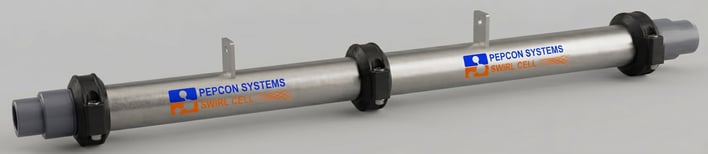
hero_swirl_cell_product

PEPCON® SwirlCell

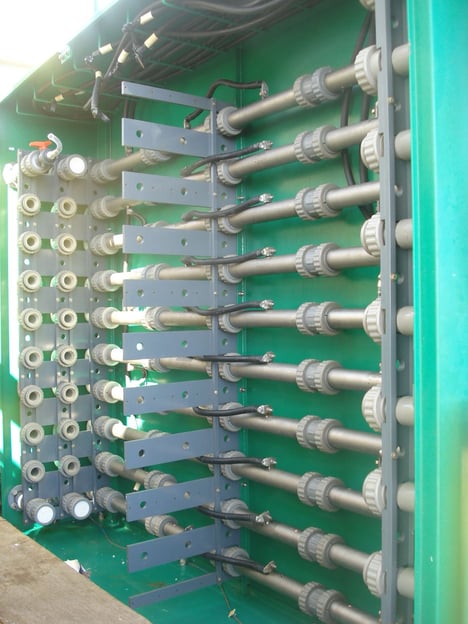
           empathy_cte_cells_enclosure

Tearing out two rows of tube cells to fix a leak in the third. Watching a new leak appear after you put it all back together. Cells dropping production capacity from fouling you cannot reach. Chasing failures should not be a routine part of running an electrochlorination system.

THE PROBLEM

Three problems every CTE operator already knows.

These are not maintenance inconveniences. They are structural limitations built into the original tube cell design, and they show up in every fleet, every region, every duty cycle.
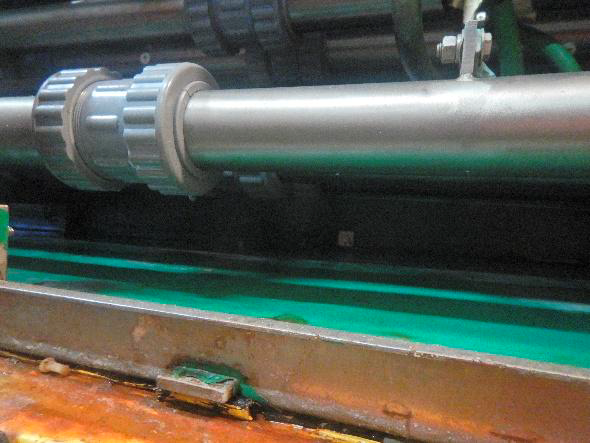
Face-seal union connection on a concentric tubular electrochlorination cell

PROBLEM 01

Leaking Connections

Tube cells stack two and three rows deep in the enclosure. A leak in the back row means disassembling everything in front of it. Then doing it again the next time a connection fails.

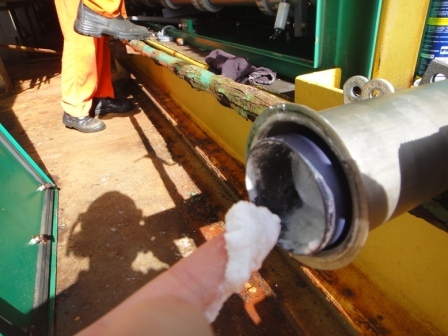
Hard mineral scale pulled from inside a fouled electrochlorination cell

PROBLEM 02

Scale That Robs Production

Center-channel velocity prevents bridging, but it cannot stop scale from building on the electrode surface. Production capacity drops. Efficiency drops. Eventually the cell fails.

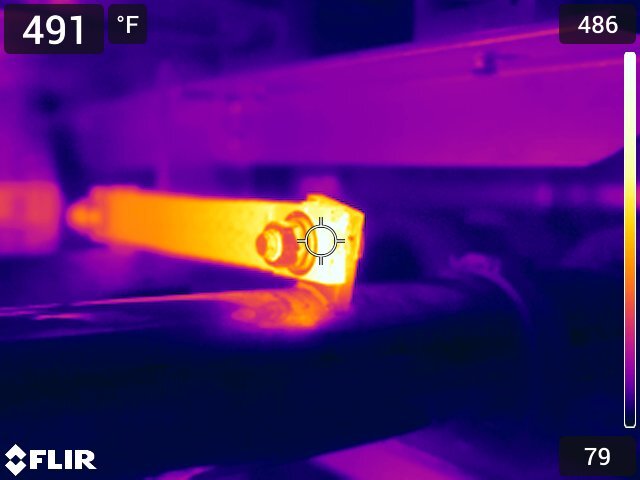
Thermal camera image of a DC connection running at 491 degrees Fahrenheit

PROBLEM 03

Connections That Overheat

DC connections loosen from thermal cycling. Resistive heat builds under load. The failure happens between scheduled inspections.

Seventy years building these systems. So we built a better cell.

PEPCON®, the electrochlorination division of H2O, has been engineering and manufacturing seawater electrochlorination systems since the 1950s. Hundreds of PEPCON systems operate in fleets, offshore platforms, and coastal facilities around the world. We developed the SwirlCell to solve the three problems our customers told us they lived with every service interval.

● PROBLEM 1 · LEAKING CONNECTIONS

Every leak means tearing apart your enclosure to reach it.

CTE tube cells stack two and three rows deep inside the enclosure. When a connection on a back-row cell starts to leak, you do not just fix that connection. You disassemble every cell in front of it, repair the leak, then put it all back together. And it is not uncommon for a new leak to spring up somewhere else once the system is back in service. Your maintenance team is not fixing leaks. They are chasing them.

When seawater and hypochlorite escape into a confined enclosure, they bring entrained hydrogen along with them. That is a corrosion problem for everything inside the enclosure, a short-circuit risk on live electrical, and a hydrogen-in-a-confined-space safety concern all at once.

The mechanical root cause: traditional CTE tube cells connect with face-seal unions on Schedule 5 titanium tubing flared 90 degrees. The flange face was never machined flat. Under-tighten and it leaks. Over-tighten and the union nut cracks. There is no correct torque value for a surface that was never flat to begin with.

🔗 HOW THE SWIRLCELL SOLVES IT · GROOVE COUPLINGS

  • Seal defined by machined groove geometry, not flange face condition
  • Each connection is mechanically independent, no load shift to adjacent joints
  • Rated 150 PSI working / 250 PSI hydrostatic, nearly 2x traditional
  • Serviceable in tight spaces without disturbing surrounding cells


▶ Watch: SwirlCell groove couplings


200

PSI


Verified by hydrostatic test. Zero leakage at 200 PSI.

The SwirlCell outer body was pressure-tested to 150 PSI for 70 minutes, then stepped up to 200 PSI for an additional 31 minutes. Witnessed, signed, and logged at one-second intervals.

No visible weeping, dripping, or leakage at any coupling, fitting, or spool body. All pressure variance was temperature-correlated.

Traditional face-seal unions are limited to roughly 80 PSI working pressure. The SwirlCell holds 2.5x that with no seal failure.

Hydrostatic test report dated April 29, 2026. Recorder S/N 156684 with current pressure and temperature module calibrations. Signed by shop manager and R&D engineer.


● PROBLEM 2 · SCALE THAT ROBS PRODUCTION

Center-channel velocity does not stop the scale that matters.

The cathode generates a high-pH boundary layer along the electrode wall. Calcium and magnesium precipitate as hard mineral scale in that thin zone, right where the electrochemistry is happening. Traditional CTE tube cells rely on high velocity through the center of the annular passage to prevent scale from bridging the electrode gap. It works, in the sense that the cell does not short out. But it does not touch the boundary layer at the surface.

So scale keeps building on the electrode surface, even in cells that look like they are running fine. Production capacity drops. Hypochlorite output drops. Efficiency drops. The system has to work harder to do the same job, and eventually that surface fouling becomes a cell failure mode of its own.

≋ HOW THE SWIRLCELL SOLVES IT · HELICAL FLOW

  • Vortex cones impart helical rotation through the annular passage
  • Strips the high-pH boundary layer off the electrode surface itself
  • Scale is prevented from forming, not cleaned off after the fact
  • Continuous high shear force directly at the cathode wall, not just the center channel


97%

of CTE surface vulnerable to scale

Verified by CFD analysis. 8.6 million data points.

At low flow rates, 97% of the traditional CTE tube cell's active electrode surface sits below the 30 Pa wall shear stress threshold needed to prevent calcareous deposition. Nearly the entire active area is vulnerable to scale buildup.

On the SwirlCell, less than 3% of the surface falls below that same threshold. Same flow rate. Same seawater. Same comparison basis. Different geometry.

Average cleaning force at the electrode wall increases by 80% across all tested flow rates.

Cleaning force measured as wall shear stress (WSS). 30 Pa threshold is the established minimum for controlling calcareous deposition. Both cells measured across active electrode area only.

● PROBLEM 3 · CONNECTIONS THAT OVERHEAT

The third failure mode has a fix too. And it does not rely on a calendar.

DC connections loosen from thermal cycling between operating and ambient conditions. Resistive heat builds under load. Calendar-based tightening schedules are guesswork because the failure does not wait for the next inspection. By the time you see damage, the connection has already cooked.

HOW THE SWIRLCELL SOLVES IT · RTD TEMPERATURE MONITORING

  • RTD probes at each termination point
  • Rising temperature is the early warning of a loose connection
  • New systems: direct PLC integration
  • Retrofits: add-on monitoring module available


▶ Watch: RTD connection monitoring


DROP-IN RETROFIT
A drop-in retrofit. Not a capital project.
The SwirlCell is dimensionally identical to conventional CTE tube cells. Same footprint. Same electrical. Hydraulic
connections vary by OEM, which is exactly what our free system review is for.
```
```
What you do NOT need to change
—   Piping or manifolds
—   Electrical wiring or bus bars
—   Rack or mounting structure
—   Rectifiers or control panels
—   Skid layout or footprint
Compatible OEM systems
   PEPCON® (all current models)
   De Nora SANILEC
   Xylem / Evoqua Chloropac
   Other CTE tube cell installations


No capital project. No engineering change order.
Just a better cell, installed at your next scheduled service interval.
Not ready to switch your whole train? Start with one.
Because the SwirlCell is dimensionally identical to the cell you are already running, you can swap a single cell into an existing train at your next scheduled service. Run it alongside the originals. Compare what you see. Then decide.
Request a Trial SwirlCell Schedule a Free System Review

 

WHAT'S AT STAKE 


Two paths forward.

The cells in your system today will keep behaving the way they always have. Or they will not have to.

Keep the CTE cells

  • Continue scheduling emergency maintenance around leak events
  • Accept production loss from scale you cannot reach
  • Inspect DC connections manually and hope the interval is right
  • Carry the labor and downtime cost of each service cycle

Switch to SwirlCells

  • Groove-coupled connections rated to 250 PSI, serviceable in place
  • Helical flow that strips the boundary layer and protects the electrode surface
  • RTD monitoring that flags loose connections before they fail
  • Dimensionally identical drop-in at next service. No system modification.

THE PLAN

Three steps. That's the plan.

We have engineered the cell so the path to using it is simple. No drawn-out engineering review. No budget shock. No site shutdown.

1

Send Us Your System

Cell model number and quantity. We confirm dimensional and hydraulic compatibility.

2

Get a Quote in 24 Hours

Pricing for a trial cell, a full train, or a fleet, delivered within one business day.

3

Install at Next Service

Your next scheduled cell change becomes your first SwirlCell installation.

Stop chasing leaks.

Send us your cell model number. We will tell you what fits and quote it within one business day. Or request a trial cell and see the difference at your next service interval.

Request a Quote Request a Trial SwirlCell Schedule a Free System Review