Technical Bulletins · PEPCON® Electrochlorination
Electrochlorination technical bulletinsfor seawater cooling and marine growth prevention.
Guides by Jess Fike, H2O Inc. and PEPCON Systems
Engineering guides on keeping seawater cooling systems free of marine growth with on-site electrochlorination: how much seawater a heat load needs, what fouling costs, how to dose to a residual, and how FlexiFit systems run with a small crew. Written for naval architects, marine and cooling-system engineers, and package engineers.
Available now
Each new bulletin is added here as it is published.
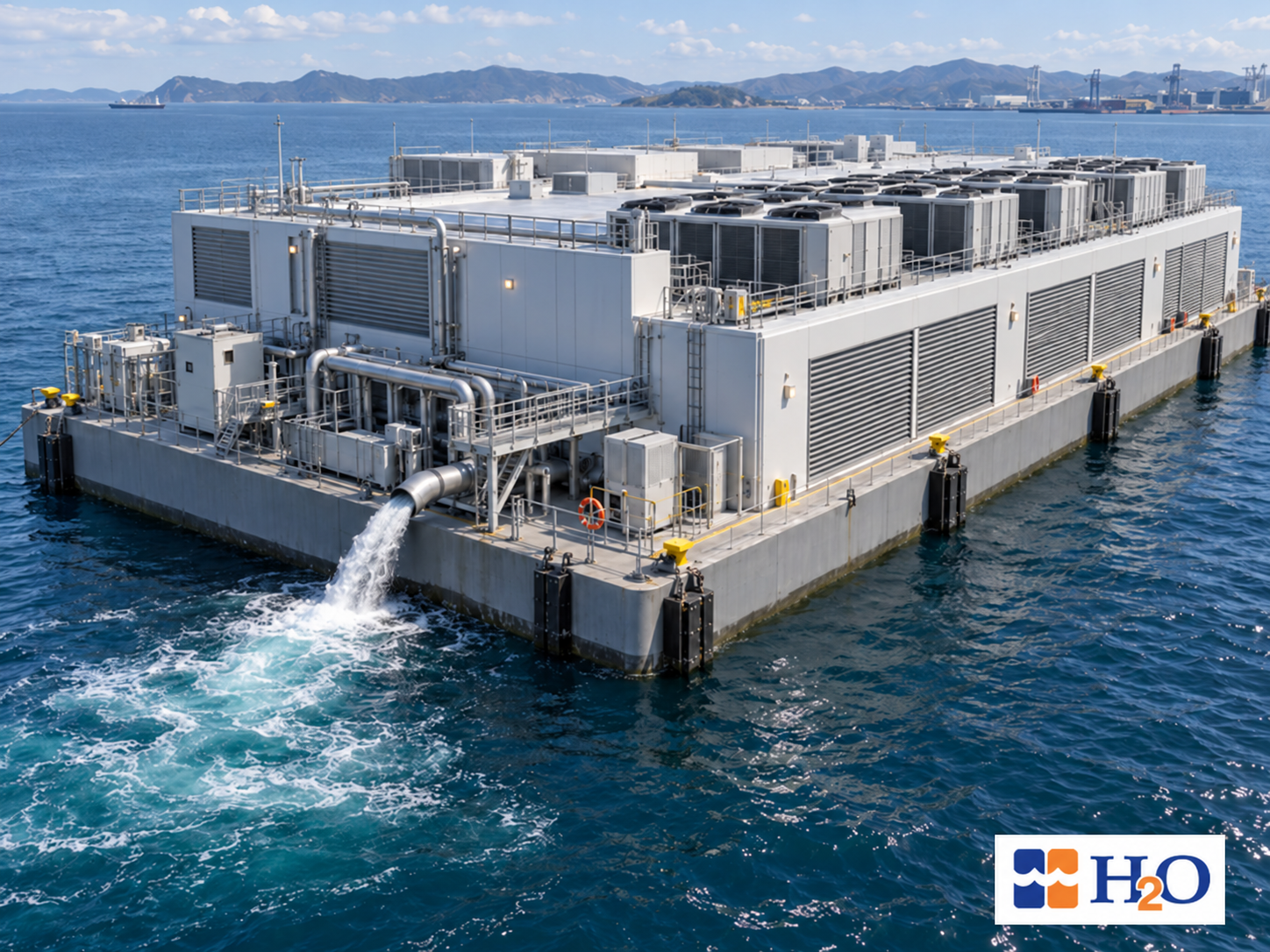
TB-DS001: Seawater Cooling for Floating Data Centers
Part 1: the heat to reject, what fouling costs, and how to keep the system clean. How much seawater a floating data center needs, why marine growth costs compute capacity, why strainers cannot stop it, and how a positive chlorine residual keeps the system clean from day one.
By Jess Fike · Revision 1 · November 19, 2026 · 10 pages
Coming next in the series
These bulletins will be added to this page as they are published.
Marine Growth Control and Dosing
Electrochlorination design and sizing, dosing strategy, and hydrogen handling.
Reliability and Controls
Redundancy, monitoring, automated cleaning, and normalization.
Materials and Thermal Discharge
Corrosion, intake effects, and thermal discharge.
Why marine growth prevention matters in seawater cooling
Any system that uses the ocean as its heat sink pulls bacteria, algae and mussel and barnacle larvae through its sea chest, pumps, piping and heat exchangers. Strainers stop debris, not organisms. Without treatment, biofilm adds thermal resistance within hours and macrofouling narrows the flow path, so the heat exchanger loses capacity.
PEPCON electrochlorination generates sodium hypochlorite on site from seawater and holds a small, positive chlorine residual through the whole wetted path. See PEPCON biofouling control systems.
Some of Our Clients